
Brown Fused Alumina P Grit for Coated Abrasives
Select brown fused alumina P grit by grain shape, particle distribution and coating performance. Confirm customer grading requirements before ordering.
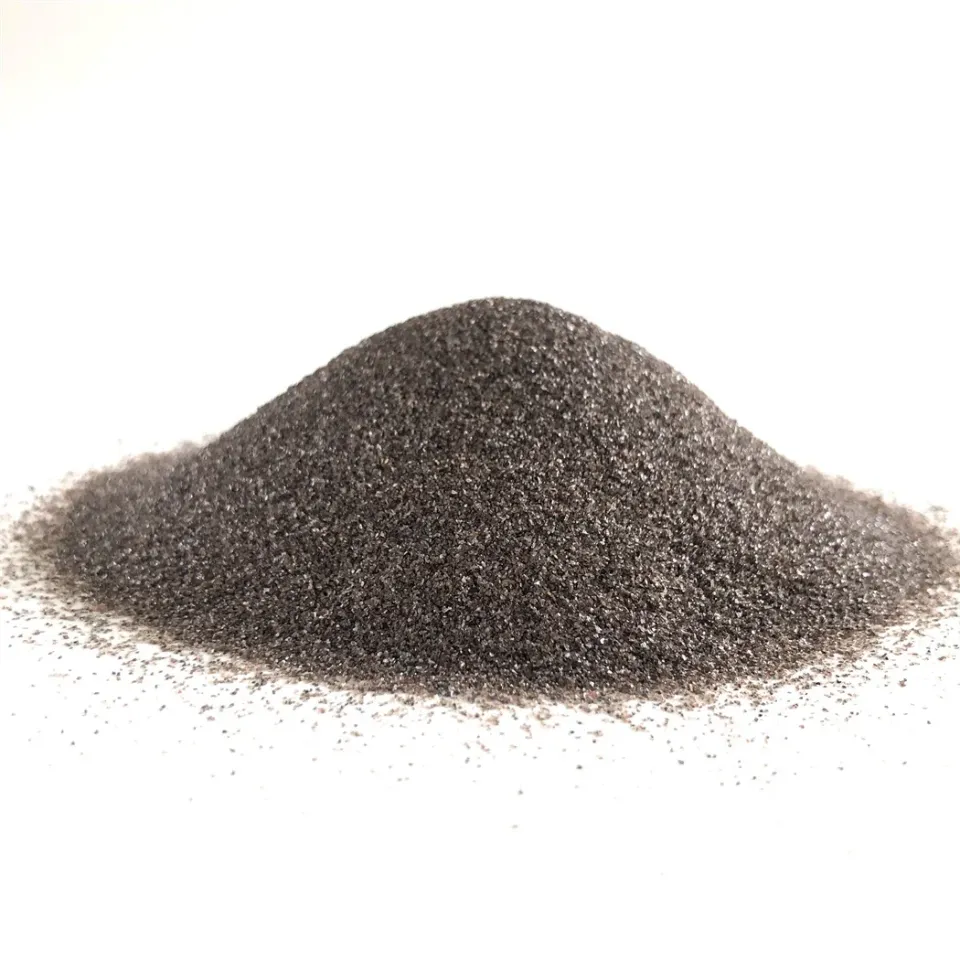
Brown fused alumina grain works together with the backing, bonding system and coating process in the manufacture of sandpaper, abrasive cloth and sanding belts.
Purchasing should consider grain shape, particle distribution and batch consistency alongside chemical composition.
A clear specification answers several practical questions. What particle shape is required? Which grading specification applies? Does the material suit the established coating process? Does the finished abrasive meet its defined working requirements?
Answering these questions before sample preparation gives purchasing, production and quality teams a common basis for evaluation.
1. Identify the application and P-grit requirement
Brown fused alumina P grit is used in manufacturing sandpaper, abrasive cloth, belts and related coated abrasives. Flap discs are made from coated abrasive cloth, so their material selection also involves the grain, backing and bond.
Purchase documents should identify the finished product, workpiece and complete grading requirement. F and P grades have different particle distribution requirements. Inquiries, sample approval and delivery should use consistent designations.
For a P80 order, specify the applicable standard and distribution. Where a customer-specific grading specification applies, provide the corresponding technical requirements.
2. Examine sharp grain shape and cutting-edge renewal
Select angular particles with well-defined cutting edges
Coated abrasives cut through grains fixed to a backing. Brown fused alumina P grit intended for sharp cutting should have well-defined corners and prominent cutting edges.
Evaluate the original grain together with its distribution and exposed cutting points after coating. The coated surface performs the work, so raw-grain inspection and production trials belong together.
Definition of corners and cutting edges.
Consistency of shape within the specified material.
Distribution and cutting-point exposure after coating.
Local clustering and abnormal particles.
Compare these observations with actual sanding results, then retain them as a reference for sample approval and incoming batches.
Appropriate fracture exposes fresh cutting edges
Cutting edges wear during grinding and sanding. When a grain fractures appropriately under load, the fracture exposes fresh cutting edges that continue working. This contributes to abrasive self-sharpening.
Evaluate initial sharpness together with cutting performance during continued use. Inspect grain wear, fracture and shedding alongside the workpiece surface.
Recording the trial at defined intervals shows how material removal, abrasive consumption and finish change over the working period.
3. Agree on particle distribution and batch consistency
Brown fused alumina P grit is covered by applicable national grading standards. Inspection should follow the adopted standard and test method. Purchase documents should identify the standard, edition and relevant grade.
Assess uniformity against the specified particle distribution. Check whether the required fractions meet the agreed limits and whether successive batches remain consistent.
For finishing products, combine grading inspection with scratch-pattern assessment. For material-removal products, also record cutting and subsequent finishing requirements.
Inspection item | What to confirm |
|---|---|
Grade designation | Complete P grade or customer-specific designation |
Specification | Applicable standard and edition |
Particle distribution | Agreed fractions and tolerances |
Test method | Consistent measurement and acceptance criteria |
Batch consistency | Comparison with the approved sample and technical requirements |
4. Provide customer-specific grading requirements in advance
Some coated-abrasive manufacturers specify their own particle distributions to suit their products and production processes. The supplier then screens or classifies the material to the agreed customer specification.
Clarify these requirements during the inquiry stage. The customer should provide:
Relevant grade and custom specification identifier.
Required particle fractions.
Tolerances and acceptance criteria.
Test and sampling methods.
The basis for sample approval and production delivery.
The supplier should confirm production capability before preparing samples and processing the order. Packaging, inspection documents and order identification should correspond to the agreed custom specification.
A grit designation alone leaves room for different interpretations of the required distribution. Early agreement reduces the risk of unsuitable samples, returns and production delays.
5. Match the grain to coating, bonding and backing
During coating, brown fused alumina P grit needs to form a distribution and working surface that meet the finished-product requirements.
Before comparing suppliers, confirm the particle distribution and acceptance basis for each sample. Where an internal customer specification applies, use samples meeting that specification.
Keep the backing, make coat, size coat, grain application and curing conditions fixed during the comparison.
Production stage | Inspection focus |
|---|---|
Grain feeding | Delivery consistency and actual consumption |
Grain application | Distribution, exposed cutting points and clustering |
Bond application and curing | Recorded conditions against the established process |
Flexing and conversion | Coating integrity and grain retention |
Finished-product sanding | Initial cutting, continued cutting, wear and finish |
Review production records together with finished-product results when selecting the abrasive or deciding on subsequent adjustments.
6. Set trial priorities for the finished product
Sandpaper, belts and flap discs have different constructions. Define the trial around the product being manufactured.
Finished product | Trial priorities |
|---|---|
Sandpaper and abrasive cloth sheets | Coating uniformity, scratch pattern, grain retention and finish |
Sanding belts | Sustained cutting, abrasive consumption, loading and performance under the specified load |
Flap discs | Cutting and wear of the abrasive cloth, followed by finished-disc performance |
Rolls and other formats | Continuous coating, conversion and production consistency |
Flap-disc manufacture also includes cloth cutting, flap bonding and assembly. Evaluate the stages under your control and record the results for the abrasive cloth and completed disc separately.
Select the grit according to the product, workpiece, equipment and required surface, then confirm it through production trials.
7. Confirm samples through repeatable testing
Confirm the technical specification. Identify the material, particle distribution, grain shape and acceptance basis.
Fix production conditions. Use the same backing, bond, coating and curing process.
Record manufacturing behavior. Check feeding, application weight, coating condition and integrity after processing.
Standardize operating conditions. Align the workpiece, tool, pressure, abrasive area and extraction.
Assess cutting and finish. Record material removal, consumption, scratches and time to the acceptable endpoint.
Repeat and retain samples. Keep approved samples, batch identification and trial records for incoming-material comparison.
Cost comparison should include abrasive-product consumption, processing time and rework. Cost per acceptable workpiece or unit of finished area connects the raw-material price with production cost.
8. Give the supplier a clear purchasing brief
Include the finished product, workpiece, P grade, applicable standard, customer-specific distribution, grain shape, coating method and expected quantity.
Bodan normally stocks standard brown fused alumina. High-temperature calcination and grain coating are supplied to order for specified applications. Confirm the supply specification, samples and lead time during quotation.
Product specifications and F- and P-grit distribution documents are available on the Brown Fused Alumina F Grit product page and in its Documents download section. State the P-grit and customer-specific grading requirements clearly when inquiring about coated-abrasive manufacture. Evaluate samples using your own formulation and production conditions before confirming suitability for purchase.
Frequently asked questions
Why does sharp grain shape matter for P-grit abrasives?
Well-defined corners and cutting edges contribute to a sharp working surface. Evaluate raw-grain shape, cutting-point exposure after coating and actual sanding performance together.
How does self-sharpening occur during use?
Appropriate grain fracture exposes fresh cutting edges that continue working. Record cutting behavior together with abrasive consumption during the trial.
When should a customer provide an internal grading specification?
Provide it before quotation and sample preparation. Sample approval, production and acceptance should use the same agreed technical requirements.
How should samples from different suppliers be compared?
Align the material specification, particle distribution and acceptance criteria first. Then use fixed production and operating conditions to compare manufacturing behavior, cutting, consumption and final surface quality.