
Brown Fused Alumina F Grit for Bonded Abrasives
Select brown fused alumina F grit for resin-bonded and vitrified wheels. Review common grits, material checks and production trials.
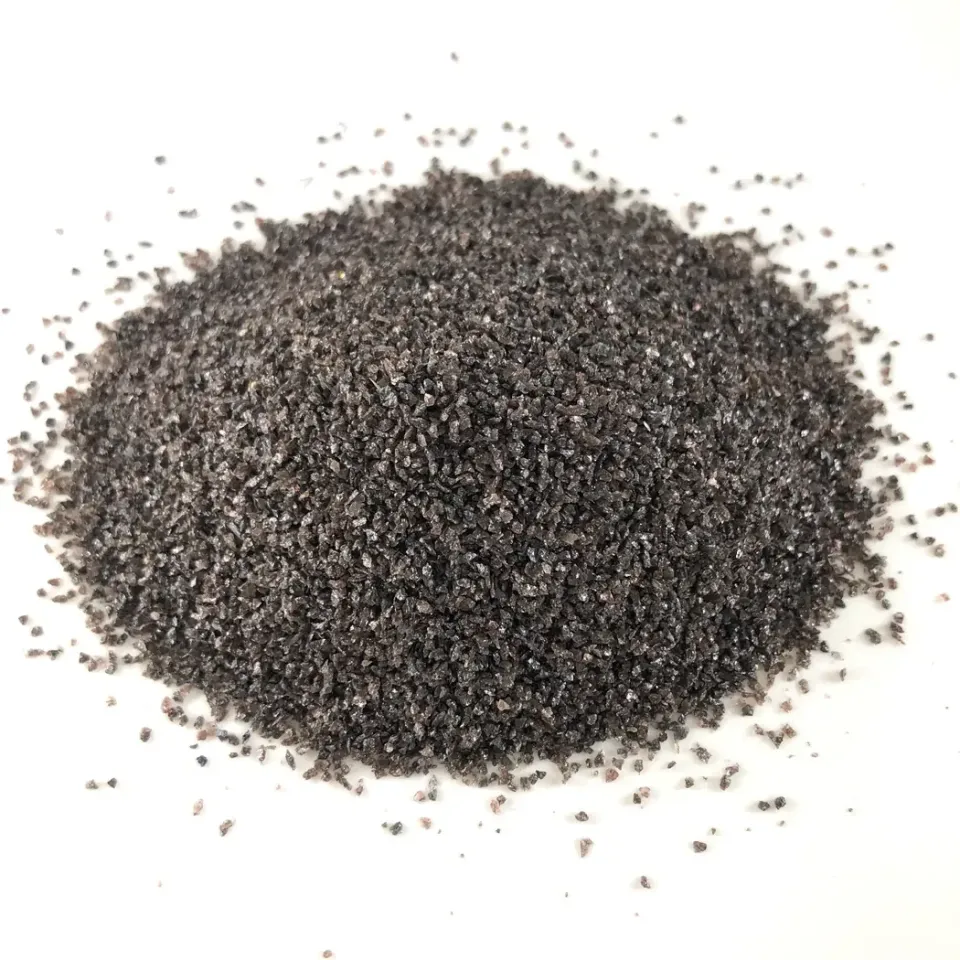
Selecting brown fused alumina F grit starts with the finished abrasive product.
Is the material intended for resin-bonded cut-off wheels, grinding discs or vitrified grinding wheels? Which grit or grit blend does the formulation require? Does the material meet the established requirements through mixing, forming and finished-product testing?
A clear purchasing specification gives production, quality and procurement teams a consistent basis for evaluation. It also helps the supplier prepare the appropriate sample.
1. Identify the abrasive product and material grade
Brown fused alumina F grit is used in bonded-abrasive manufacture. Begin by specifying the product, workpiece and formulation requirements.
Bodan supplies standard brown fused alumina F grit for selection in resin-bonded cut-off wheels and grinding discs. For vitrified grinding-wheel projects, high-alumina, low-iron brown fused alumina is selected against the product requirements.
Abrasive product | Material selection | Information to provide |
|---|---|---|
Resin-bonded cut-off wheels | Standard brown fused alumina F grit to the formulation specification | Dimensions, workpiece, grit or blend and material requirements |
Resin-bonded grinding discs | Standard brown fused alumina F grit to the formulation specification | Product, application, grit and performance acceptance criteria |
Vitrified grinding wheels | High-alumina, low-iron brown fused alumina | Product, bond, firing conditions, grit and chemical requirements |
Define chemical composition, grading and other material controls in the supply specification. Before comparing quotations, confirm that the grade, grit and inspection basis are aligned.
2. Common grits for resin-bonded and vitrified abrasives
Select the grit according to the specific product, formulation and intended application.
Abrasive product | Common brown fused alumina grits |
|---|---|
Resin-bonded abrasives, including cut-off wheels and grinding discs | F24, F30, F36, F40, F46, F54, F60 |
Vitrified abrasives, including grinding wheels | F36, F40, F46, F54, F60, F80, F100, F120 |
These grades provide a reference for selection. Confirm whether the formulation uses a single grit or several grades together.
For an established blend, identify each grit and its proportion. Sample approval, incoming inspection and production should follow the same requirements.
When changing the grit selection, document the adjustment and evaluate it through finished-product trials.
3. Confirm the designation and particle distribution together
Designations such as F24, F46 and F60 refer to their respective particle distribution requirements. Purchase documents should identify the complete grade, applicable standard and distribution criteria.
For formulations using several grits, inspect each component against its specified requirements.
Inspection item | What to confirm |
|---|---|
Grade designation | Complete F grade, such as F36 or F46 |
Applicable standard | Standard and edition |
Particle distribution | Required fractions and acceptance criteria |
Test method | Sampling, measurement and interpretation |
Batch identification | Connection between the delivered material and inspection records |
Keep approved samples and inspection records for incoming-material comparison. These records also support investigation when production results change.
4. Include the relevant raw-material checks
Alongside grading, assess chemical composition, grain shape, bulk density, cleanliness and moisture condition.
Chemical composition
Confirm alumina and relevant impurity requirements for the selected grade and grit. For vitrified wheels using high-alumina, low-iron material, specify the corresponding limits in the purchasing documents.
Quotation, sample approval and delivery should use the same requirements. Inspection records should identify the supplied batch.
Grain shape and bulk density
Inspect grain shape and measure bulk density using an agreed method. Review the results together with mixing, filling and forming records to establish a material reference for the formulation.
Compare supplier samples under the same inspection conditions and confirm suitability through production trials.
Cleanliness, magnetic material and moisture
Define the required controls for fines, foreign material, magnetic material and moisture according to the manufacturing specification. Agree on the test methods and acceptance criteria.
On receipt, check packaging and batch identification, then sample and inspect the material before storage and production use.
5. Set finished-product tests for the application
Raw-material evaluation should extend to the finished abrasive. Cut-off wheels and grinding discs perform different operations, so their assessment should reflect their intended use.
Finished product | Suggested records |
|---|---|
Resin-bonded cut-off wheels | Cutting time, effective cuts, wheel wear and cut condition |
Resin-bonded grinding discs | Material removal over a defined period, disc wear and workpiece surface |
Vitrified grinding wheels | Forming, firing, quality inspection and machining results against the product specification |
For cut-off wheels, keep the workpiece material and dimensions, equipment, operating method and end-of-use criteria consistent.
For grinding discs, standardize the workpiece, working area, grinding time and operating conditions. Record workpiece and abrasive weights. Operator observations on cutting feel, vibration and handling can supplement the measurements.
Complete the required quality and safety verification before evaluating the abrasive product in use.
6. Keep production trials interpretable
Where a formulation is already established, hold the resin, fillers, reinforcement, forming and curing conditions steady while comparing candidate brown fused alumina.
Confirm the material specification. Identify the grade, F grit, distribution and acceptance requirements.
Fix the formulation and process. Keep the other materials and production conditions consistent.
Record manufacturing conditions. Retain batch, mixing, filling, forming and curing records. Record the relevant firing conditions for vitrified products.
Complete finished-product inspection. Carry out the required quality and safety checks.
Standardize application testing. Use the same workpiece, equipment and acceptance endpoint.
Repeat and retain samples. Keep approved material, test results and batch identification for future comparison.
Document formulation or process adjustments separately so the results can be traced to the changes made.
7. Clarify standard and treated-material requirements
Bodan normally stocks standard brown fused alumina. Manufacturers of resin-bonded cut-off wheels and grinding discs can specify material against their established products, formulations and grit requirements.
High-temperature calcination and grain coating are supplied to order for specified applications. Identify the treatment, finished abrasive, grit and acceptance requirements before confirming samples, supply specifications and lead time.
For vitrified grinding-wheel projects, discuss the requirements for high-alumina, low-iron brown fused alumina alongside the product and manufacturing process.
A clear specification helps connect sample preparation, production trials and batch delivery.
8. Information to include in an inquiry
Abrasive product and specific model.
Dimensions and workpiece material.
Brown fused alumina grade and chemical requirements.
Required F grit, or the individual grades and proportions in a blend.
Distribution, bulk density and other acceptance requirements.
Any calcination or grain-coating requirement.
Quantity, packaging and delivery requirements.
Product specifications and particle size distribution documents are available on the Brown Fused Alumina F Grit product page and in its Documents download section. Evaluate samples using your own formulation and production conditions before confirming suitability for purchase.
Frequently asked questions
Which grits are commonly used for resin-bonded cut-off wheels and grinding discs?
Common grades include F24, F30, F36, F40, F46, F54 and F60. Select the grade according to the product, formulation and application requirements.
Which grits are commonly used for vitrified abrasives?
Common grades include F36, F40, F46, F54, F60, F80, F100 and F120. When selecting high-alumina, low-iron brown fused alumina for vitrified wheels, also confirm the chemical and manufacturing requirements.
How should a multi-grit formulation be specified?
List each F grade, its proportion and distribution requirements. State whether the supplier will deliver individual grades or an agreed blend.
Are calcined and coated products standard stock items?
Bodan normally stocks standard brown fused alumina. High-temperature calcination and grain coating are supplied to order, with samples, specifications and lead time confirmed during quotation.