80 Mesh Garnet Waterjet Abrasive: Export Buyer’s Guide
A practical guide to selecting 80-mesh waterjet garnet, agreeing particle-size and moisture requirements, choosing export packing, and requesting lot-specific quality documents.
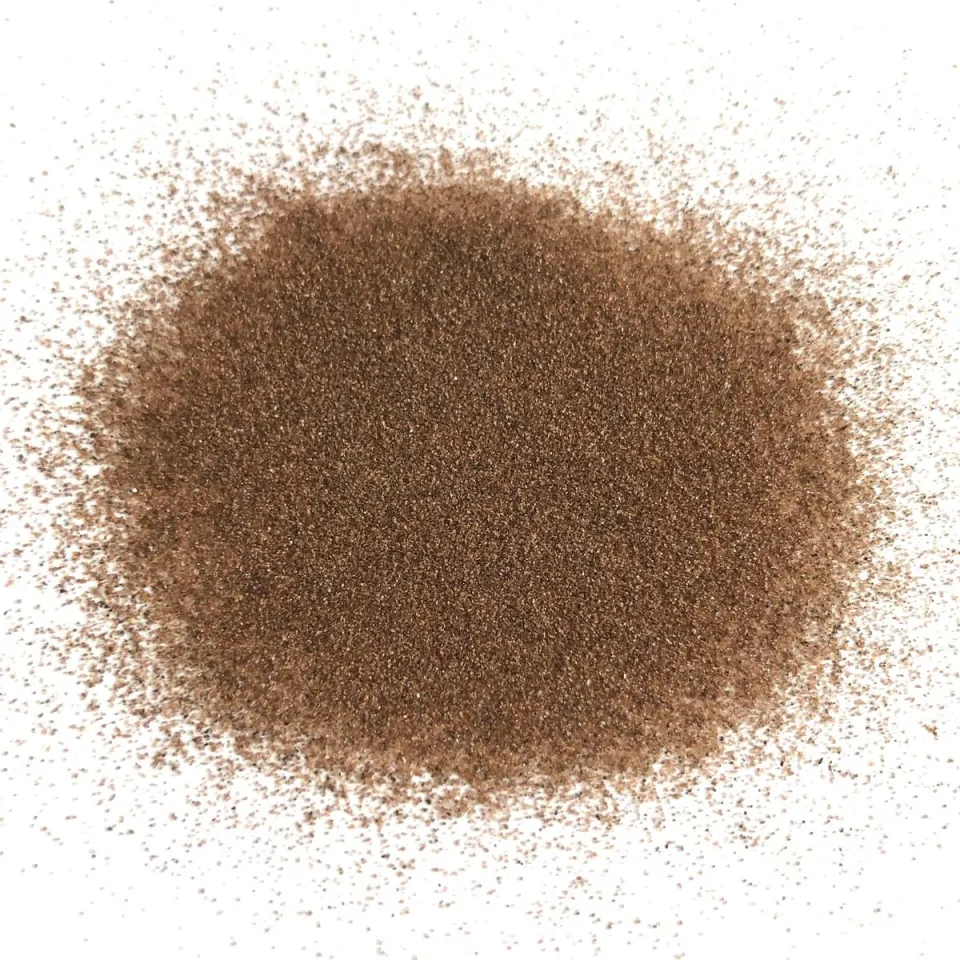
The short answer: waterjet cutting shops run 80 mesh (80#) garnet as the general-purpose waterjet grade. Coarser fractions such as 20/40#, 30/60# and 60# are blasting media, not waterjet grades, and finer fractions are used only where the machine and the required edge finish call for them. The mesh number is only the start of the conversation, though. On export orders, the questions that decide whether a container performs are particle-size distribution, moisture, fines, soluble chlorides, packing and the documents that travel with the shipment. This guide sets out what to agree before the first order, based on the specifications we publish for our garnet abrasive and on what our export business has learned supplying industrial abrasives to more than 30 countries and regions.
1. Why garnet is still the default abrasive for waterjet cutting
Abrasive waterjet cutting is a cold process. A high-pressure water stream carries hard mineral grains through a focusing tube; the grains do the erosion, so the workpiece sees no heat-affected zone, no burned edges and no change to the metallurgy of the cut face. That makes it useful for steel, stainless steel, aluminium, stone, glass, ceramics and composites, and for parts that cannot tolerate thermal distortion.
Garnet — specifically almandine garnet — dominates this job because it combines hardness, density and sharp, angular grains in a naturally occurring mineral. Our published garnet specification describes a deep red to reddish-brown abrasive produced from almandine ore by crushing, magnetic separation and washing, with angular polyhedral grains, a Mohs hardness of 6.5-8.0, a true density of 3.8-4.3 g/cm³, a melting point near 1300℃, and no free silica. Its chemical profile is roughly SiO₂ 34-40%, Al₂O₃ 18-22% and iron oxides (FeO + Fe₂O₃) 28-42%, with minor CaO, MnO and TiO₂.
Density matters as much as hardness. A heavy grain carries more kinetic energy at a given water pressure, which is why garnet cuts faster than lighter mineral media. Angular grains fracture into fresh cutting edges instead of rounding off, and chemical inertness keeps the abrasive from reacting with stainless steel, aluminium or stone surfaces. For buyers, the practical consequence is that "garnet" is not one commodity: ore source, washing, drying and screening determine whether a bag cuts cleanly all day or clogs the focusing tube after twenty minutes.
2. What our export footprint actually tells a buyer
Luoyang Bodan Abrasives Co., Ltd. is based in Luoyang, the core base of China's abrasives industry, and works as a vertically integrated supplier bringing manufacturing, supply chain integration and international trade together. Our company profile reports more than 21 years of industry experience, 7,000+ m² of operating space, 180+ industrial customers worldwide and a company-wide annual output capacity of 8,000+ metric tons. Products are sold to more than 30 countries and regions across the Middle East, Russia, Japan and Korea, Southeast Asia and South America. A dedicated foreign trade department was established in 2014.
Our development record documents customer visits and factory audits from India, Indonesia, Vietnam, Thailand, Germany, Turkey, Iran, Bangladesh and Brazil, large-volume exports to Southeast Asia, and trade exhibitions in Vietnam and Mumbai. Our published application and case material also covers shipbuilding and structural steel surface preparation — the same downstream industries that consume both blasting media and waterjet abrasive.
A necessary clarification: those figures describe our company-wide abrasives business, not the sales volume of waterjet garnet as a single product line. We are not claiming a specific tonnage, customer list or market share for garnet waterjet abrasive. What the export record does tell a buyer is narrower and more useful: we are accustomed to factory audits, third-party documentation, mixed-language technical correspondence and long-distance shipments of dense mineral abrasives. Three lessons show up repeatedly in export orders, and they shape the rest of this guide.
Batch consistency outranks nominal grade. A waterjet operator sets feed rate, pressure and traverse speed around a known abrasive. A new lot that cuts differently forces a full retune, so buyers ask for a certificate of analysis per lot and retained samples.
Moisture is the most common avoidable failure. Dense, fine mineral grains that pick up water during a sea voyage bridge in the hopper and interrupt feeding. Export packing is a technical decision, not a logistics afterthought.
Documents are part of the product. Commercial invoice, packing list, bill of lading, COA, safety data sheet and — where the destination requires it — certificate of origin or third-party inspection must match the lot that was actually loaded.
3. Grade selection: why 80 mesh is the waterjet default
Our garnet range covers the fractions listed on the product page (20/40, 30/60, 60, 80, 120 and 150 mesh), but those numbers belong to different jobs. A waterjet feeds abrasive through a focusing tube only a fraction of a millimetre wide, so the grain must be closely sized, free of oversize particles and consistently dry. That is why 80 mesh (80#) is the standard waterjet grade — the practical balance of cutting speed, edge quality and reliable feeding that most machines are set up for.
Fraction | Where it belongs in our range | Is it a waterjet grade? |
|---|---|---|
20/40#, 30/60# | Heavy blasting: rust and mill-scale removal on hulls, bridges and steelwork; coarse anchor profiles | No — supplied for surface preparation only, far too coarse for a focusing tube |
60 mesh (60#) | General blasting, surface cleaning and matte finishing | No — a blasting grade, not a waterjet grade |
80 mesh (80#) | The general-purpose waterjet cutting grade for steel, aluminium, stone, glass and composites | Yes — the usual starting point for a new waterjet order |
120#, 150# | Fine polishing, mould cleaning and precision surface work | Not by default. If your process needs a finer cutting grade, confirm availability and machine compatibility with us first rather than ordering a finishing fraction |
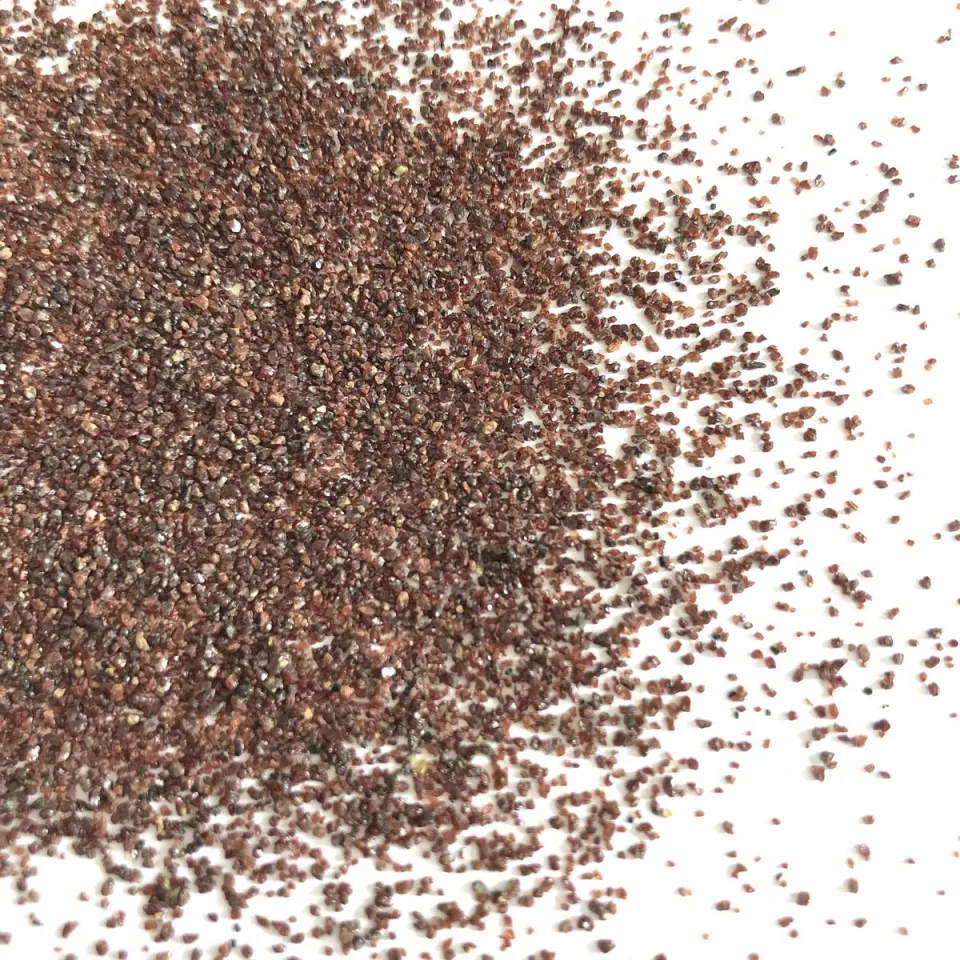
Two practical rules follow. First, state "waterjet grade" on the enquiry and the purchase order: a coarse blasting grit will not cut faster, it will block the focusing tube. Second, treat the mesh number as one line in a specification rather than the specification itself. A well-controlled 80# lot with tight sizing, low fines and low moisture will outperform a nominally identical lot that was screened and packed for blasting.
When enquiring, give us the machine type, pump pressure, focusing tube / nozzle diameter, materials and thickness range, and the edge finish you need. Custom sizing is available on request, so confirm the waterjet-grade options and the agreed sieve distribution with our export team before placing an order.
4. The COA items that decide whether a container performs
Waterjet cutting has no single universal product standard equivalent to the ISO 11126 series used for blasting media. In practice, buyer and supplier agree a specification in the COA or technical agreement. The table lists the items overseas buyers most often ask us to confirm, why each one matters on a waterjet, and what to put in writing.
Item | Why it matters on a waterjet | What to agree |
|---|---|---|
Particle size distribution and oversize | Oversize grains and excessive fines are a leading cause of focusing-tube blockage, surging feed and unstable kerf width | Sieve distribution by mesh, maximum permitted oversize and fines, and the screening method used |
Hardness and mineral type | Determines cutting speed, grain breakdown and abrasive consumption per metre cut | Almandine garnet as the mineral, Mohs hardness range (our published general range is 6.5-8.0; waterjet grades are normally selected at the upper end) |
True / bulk density | Affects kinetic energy at the jet and the feeding behaviour of a volumetric abrasive hopper | Typical values; our published true density is 3.8-4.3 g/cm³ |
Dust and fine content | Fines raise workshop dust, promote bridging and accelerate wear in hoses and focusing tubes | Washing and de-dusting steps, plus a fines limit on the COA |
Moisture content | Damp abrasive agglomerates, bridges in the hopper and breaks continuous unattended cutting | A maximum moisture figure (industry waterjet grades are commonly specified at around 0.2-0.3% or lower), drying process and moisture-barrier packaging |
Soluble chlorides | Chloride residues can cause flash rusting on cut edges of carbon steel and ship plate, especially in marine service | A ppm ceiling; values around 25 ppm or lower are common in the industry for waterjet and shipyard work |
Free crystalline silica | Occupational-health and import-compliance concern; a key reason garnet replaced silica sand | A declared limit; buyers commonly ask for less than 0.1% free crystalline silica |
Chemistry and inertness | Protects workpiece surfaces and supports consistent behaviour on stainless steel and aluminium | Oxide ranges on the COA; our published chemistry is SiO₂ 34-40%, Al₂O₃ 18-22%, FeO + Fe₂O₃ 28-42% |
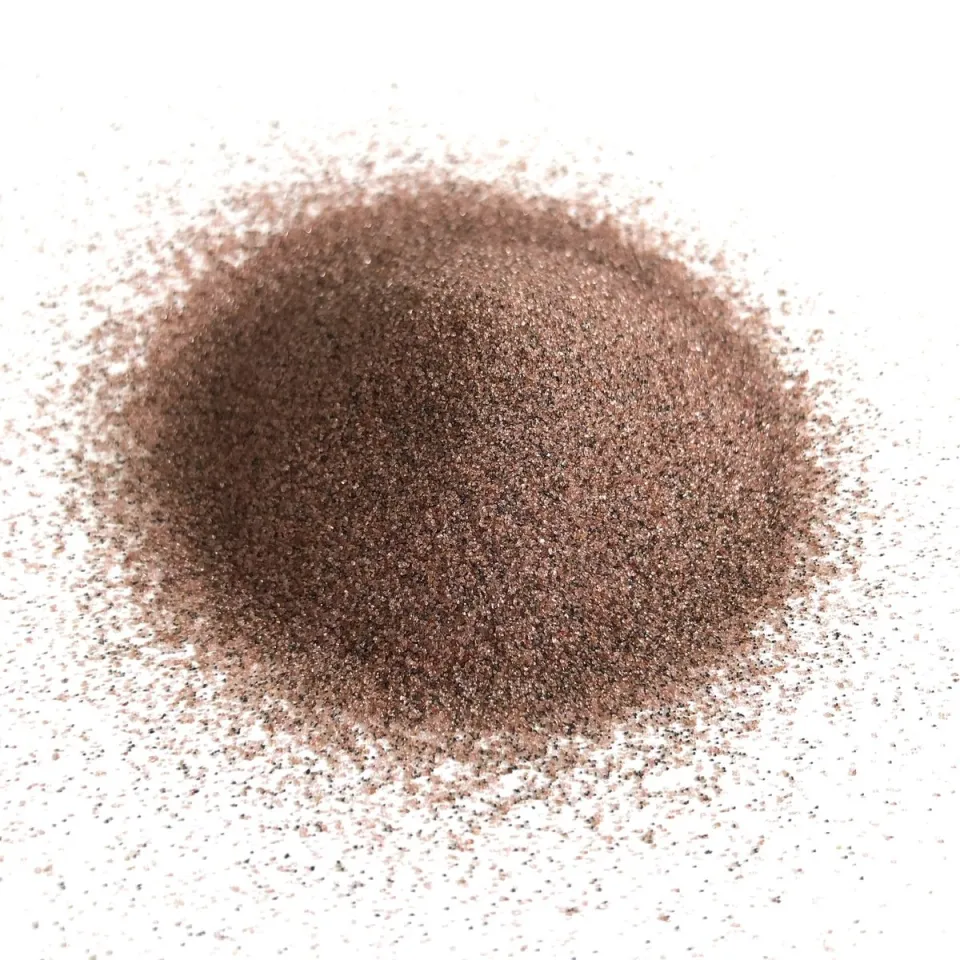
The numeric expectations in that table are industry conventions, not a blanket guarantee for every Bodan lot. Agree the actual limits in writing for your order, and ask for a COA issued against the production lot you will receive. We can supply quality documentation and — where a project requires it — support third-party inspection; our company documentation includes a quality management system certificate and an SGS audit report, available on request.
5. Blasting grade and waterjet grade are not interchangeable
Our product is listed as "Garnet Sand for Sandblasting / Waterjet Cutting" because the same ore can be processed into either application. The processing targets, however, are different.
Aspect | Blasting grade | Waterjet grade |
|---|---|---|
Typical fractions | 20/40#, 30/60#, 60# for surface preparation; 120#, 150# for fine finishing | 80# waterjet grade; any finer cutting grade only by agreement and trial |
What the job optimises | Anchor profile, rust and coating removal, cleanliness to Sa 2.5 / Sa 3.0 | Cutting speed, edge quality, uninterrupted abrasive feed |
Critical controls | Grain size for profile, hardness for recyclability, low dust and low chloride | Tight sizing, removal of oversize and fines, very low moisture, low chloride |
Reference standards | ISO 11126 series for non-metallic blasting abrasives, with test methods in ISO 11127 | No equivalent universal waterjet abrasive standard; controlled by the agreed COA and trial cuts |
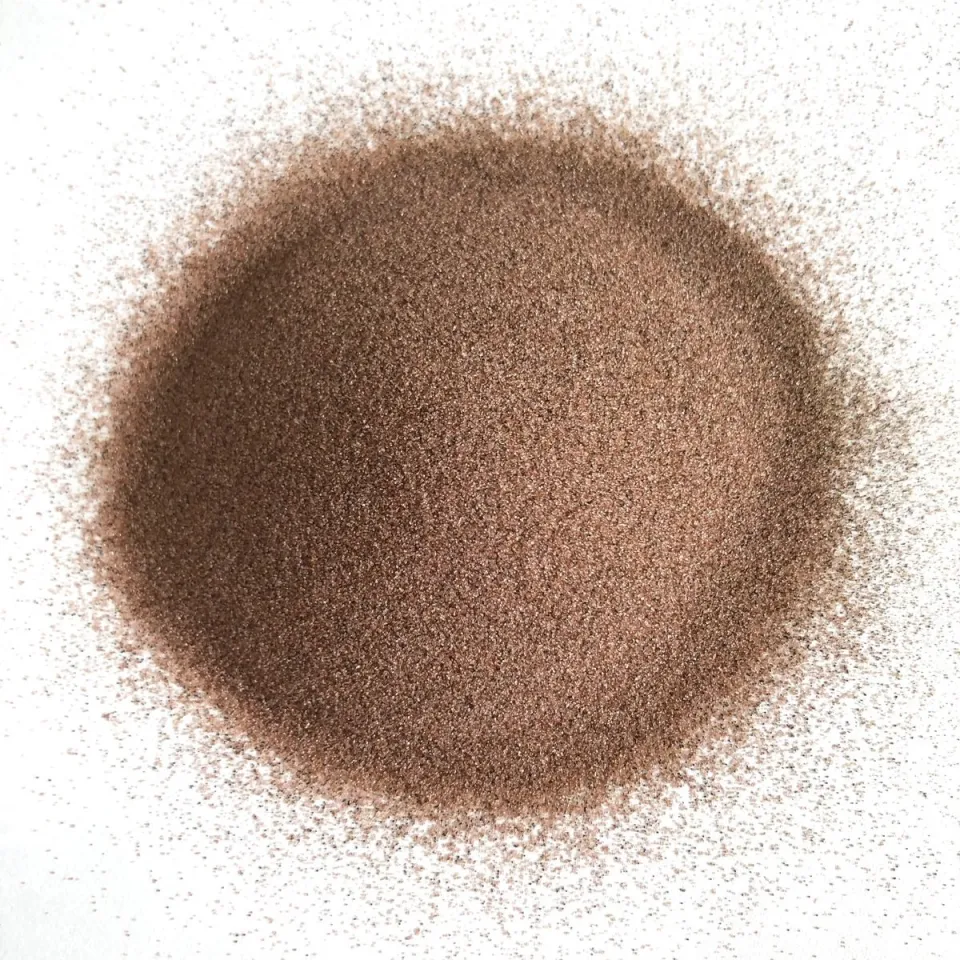
Using a coarse blasting fraction in a waterjet risks clogging the focusing tube and delivering a rough, inconsistent edge. Using an expensive waterjet grade for open blasting wastes money on a profile that does not need it. State the application on the purchase order, and keep the two grades in separate, clearly marked lots. Our product page also notes that recovered blasting garnet can be screened and reused; that practice belongs to blasting, not to a waterjet's closed feed system.
6. Export packing, container loading and documents
Our standard packing options are 25 kg lined woven bags, 1 ton bulk bags and custom packaging on request. For waterjet grades, the lining and the pallet arrangement deserve as much attention as the grain itself: a container crossing from a humid loading port to a cooler destination can generate condensation, and a single damp bag can stop a cutting table.
Keep water out. Specify inner liners, sound bag seams, dry pallets and, where appropriate, desiccant. Store in a cool, dry, ventilated place on arrival, as our product page recommends.
Confirm loading, do not assume it. Net weight per bag, bags per pallet or bulk bag, gross weight and the number of pallets per container all depend on the grade's bulk density, the packing chosen and the destination's road weight limits. Ask for a written loading plan with the quotation rather than relying on a generic "tons per container" figure.
Agree markings early. Product name, mesh, net/gross weight, lot number and any private-label or shipping marks should be fixed before production so the bags, packing list and invoice all match.
Prepare the document set. Commercial invoice, packing list, bill of lading, COA for the shipped lot, safety data sheet, and certificate of origin or inspection certificate where the destination or the letter of credit requires them. Natural garnet abrasive is commonly classified under HS 2513.20 ("emery, natural corundum, natural garnet and other natural abrasives"), but classification and duty treatment must be confirmed with the buyer's customs broker for the destination country.
Incoterms and inspection. FOB, CIF or other terms, payment method, pre-shipment inspection and any factory audit should be recorded in the contract. We are used to hosting customer audits and exhibition visits, including a documented factory audit with a customer from Thailand.
7. How we qualify a new export order
A repeatable qualification sequence protects both sides. It also avoids the most expensive mistake in this category: ordering a full container against a datasheet that was never cut on the buyer's own machine.
Define the process. Machine and pump pressure, focusing tube and nozzle diameter, materials and thickness range, target edge quality, monthly consumption and destination port.
Agree the specification. Grade, sieve distribution, COA items and limits, packing, markings and required documents.
Sample and trial cut. Request samples from the grade you intend to buy, then record cutting speed, edge finish, abrasive consumption per metre, and any feed interruption or blockage.
Fix the commercial detail. Loading plan, Incoterms, payment terms, lead time, inspection and certificate requirements.
Produce and document the lot. Batch screening and drying, COA against the actual lot, retained samples, packing inspection and container loading checks.
Review after arrival. Compare the first production lot with the trial results and keep the agreed specification as the reference for repeat orders.
Results vary with machine condition, water pressure, abrasive feed calibration, material and operator settings. We recommend validating on your own workpiece before committing to volume — the same caution we publish in our shipbuilding surface-finishing case material.
8. Frequently asked questions
Is 80# always the right choice? It is the standard waterjet grade and the right starting point for most machines. A finer edge finish on thin or brittle materials may call for a qualified finer grade, but that is a trial-cut decision made with your equipment builder and your abrasive supplier — not a reason to substitute a coarse blasting grit.
Can blasting garnet be used in a waterjet? No. Coarse blasting fractions — including 20/40#, 30/60# and 60# — are sized for surface profile, not for a focusing tube, and their wider distribution increases the risk of blockage and unstable cutting. Always order the waterjet grade for the process you are running.
How much garnet fits in one container? It depends on bulk density, bag format, pallet pattern and destination weight limits. We provide a loading plan with each quotation rather than quoting a fixed number here.
Why is moisture such a big issue? Fine, dense grains that absorb moisture bridge in the hopper, interrupt abrasive feed and can stop an unattended cutting cycle. Dry processing, barrier liners and dry container handling are the controls.
Do you provide a COA, SDS and third-party inspection? A COA against the shipped lot and a safety data sheet can be supplied, and third-party inspection can be arranged where the order requires it. Our quality management system certificate and SGS audit report are available on request.
Can packing or labelling be customised? Yes — 25 kg lined woven bags, 1 ton bulk bags and custom options are listed on our product page. Agree artwork, markings and lot identification before production.
What HS code should we use? Natural garnet abrasive is commonly declared under HS 2513.20. Confirm the applicable code, duty and any import requirements with your customs broker, since national tariff lines and documentation rules differ.
9. Conclusion
For an export buyer, garnet waterjet abrasive is a specification-and-logistics purchase as much as a mineral purchase. Specify the waterjet grade — not a blasting fraction — against the material and the machine, put the COA items (sizing, fines, moisture, chlorides, hardness and free silica) in writing, keep blasting and waterjet grades separate, and treat moisture-safe packing and a matching document set as part of the product. Our role as a Luoyang-based exporter is to make those variables predictable across a long supply chain and to support trial cuts, audits and repeat-lot consistency.
Our garnet abrasive range runs from 20/40 to 150 mesh with custom sizing on request, in 25 kg lined woven bags or 1 ton bulk bags; the 80# waterjet grade should always be specified separately from the blasting fractions. For the full specification, samples, a lot-specific COA or a loading plan for your port, see our Garnet Sand for Sandblasting / Waterjet Cutting product page and contact our export team with your machine details and monthly volume.