
Comparison of Kraft Paper and Latex Paper Backings for Silicon Carbide Sandpaper
In the coated abrasives industry, the performance of Silicon Carbide Sandpaper depends not only on the hardness and sharpness of the silicon carbide grain itself, but also critically on the choice of paper backing. Kraft paper and latex paper—the two mainstream backing materials—differ significantly in fiber structure, water resistance, flexibility, and application scenarios. This article provides a comprehensive comparison across four dimensions: material properties, application scope, storage requirements, and usage precautions.
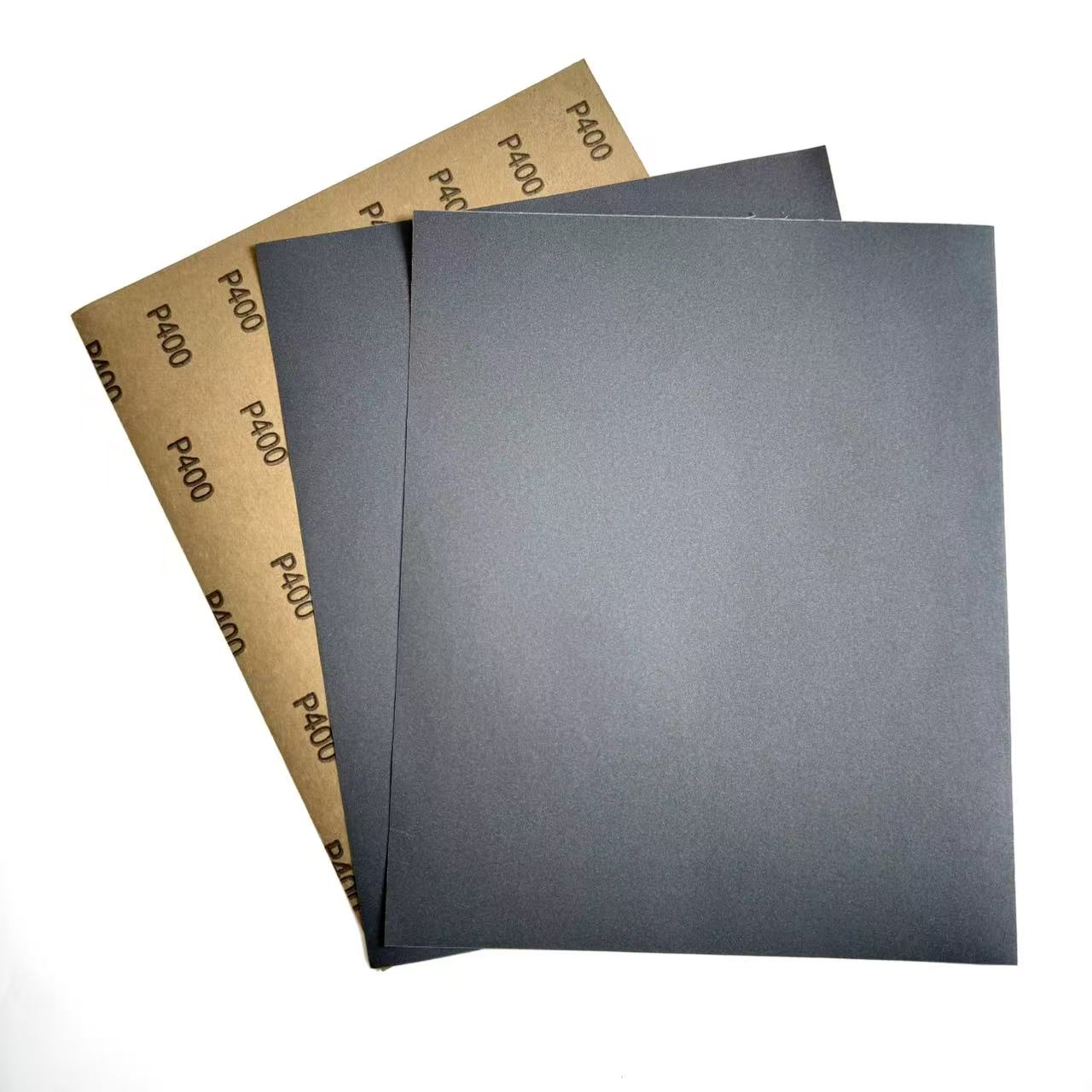
Kraft paper backing is produced from sulfate wood pulp, featuring long interwoven fibers that deliver high mechanical strength and stiffness. Its relatively porous surface allows the resin bond to penetrate and anchor the abrasive grains. The water resistance of kraft paper is limited; prolonged soaking causes fiber swelling and delamination, restricting its use primarily to dry sanding or short-duration wet sanding. From a cost perspective, kraft paper offers a clear price advantage, making it suitable for high-consumption applications.
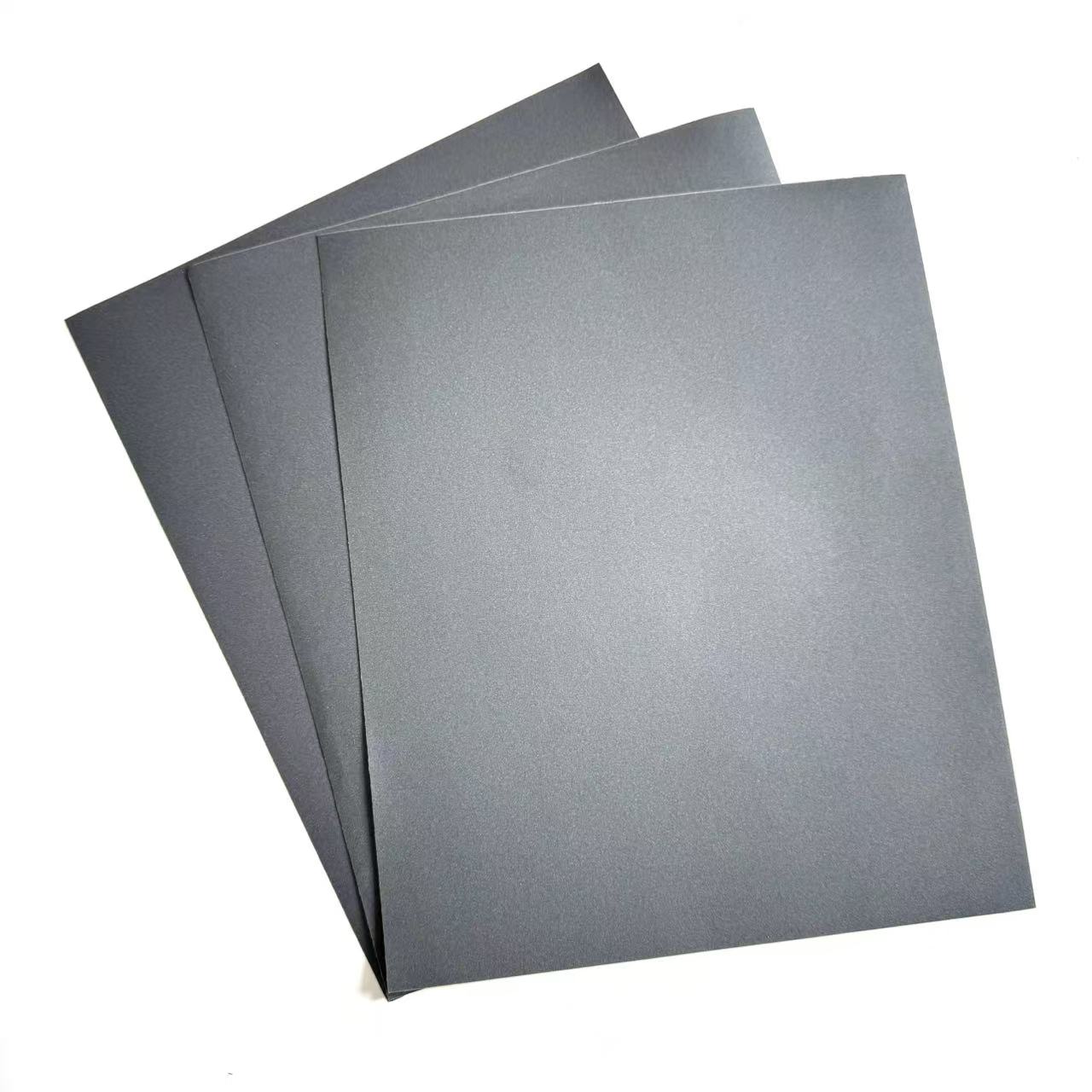
Latex paper backing is modified by impregnating the paper pulp with styrene-butadiene latex or natural latex, with latex content typically ranging from 15% to 30%. The introduction of latex significantly improves the backing‘s flexibility, water resistance, and dimensional stability, preventing softening or delamination under wet conditions. The denser and smoother latex paper surface also allows more uniform grain embedding, contributing to consistent surface finishes.
2. Application Scope
Kraft paper-backed Silicon Carbide Sandpaper is suited for cost-sensitive, primarily dry sanding applications, including bare wood sanding, wall putty leveling, and metal rust removal. The higher stiffness of the kraft backing provides efficient pressure transmission during hand sanding of flat surfaces, though conformity to curved or contoured surfaces is somewhat limited.
Latex paper-backed Silicon Carbide Sandpaper, owing to its superior flexibility and water resistance, is widely used in wet sanding applications demanding high surface quality. Typical uses include automotive paint defect repair, body filler sanding, clear coat polishing, and precision instrument component finishing. During wet sanding, the latex paper backing effectively prevents loading, and when used with water or soap solution, it achieves a finer surface finish. In addition, for non-ferrous metals such as aluminum and copper, wet sanding with latex paper backing significantly reduces workpiece temperature, preventing heat-induced material alterations.
3. Storage Requirements
Both backing types should be stored under the basic principles of “dry, dark, and flat,” though key emphases differ.
Kraft paper-backed products are more sensitive to humidity. Recommended relative humidity for storage is 50% to 60%; excessive moisture can cause the paper to absorb water and expand, leading to curling or abrasive layer cracking. Stacking height should be controlled to prevent irreversible compression deformation of the backing.
Latex paper-backed products require additional protection from prolonged high-temperature exposure due to the latex content. High temperatures accelerate latex aging, making the backing brittle and reducing flexibility. Latex paper backing should also avoid contact with organic solvents or grease, which can cause latex swelling and compromise structural integrity. Under compliant storage conditions, both product types typically maintain a shelf life of up to two years.
4. Usage Precautions
Kraft paper-backed sandpaper requires attention to the following: First, prolonged immersion in water is not recommended; if wet sanding is necessary, limit water exposure time and dry the sheet promptly after use. Second, avoid excessive bending stress on the edges during hand sanding—kraft paper has lower fold endurance than latex paper, and repeated folding can cause backing fracture. Third, when sanding curved surfaces, use a flexible sanding block to compensate for limited backing conformity.
Latex paper-backed sandpaper precautions include: First, despite excellent water resistance, residual swarf and moisture should be removed after use to prevent hardened debris from clogging the abrasive structure upon drying. Second, during fine finishing stages, control sanding pressure; the elastic recovery properties of latex paper enable effective cutting at low pressure, and excessive force accelerates grain dulling. Third, when wet sanding with latex paper-backed products, use neutral water or a dedicated sanding lubricant; avoid strongly acidic or alkaline liquids that may damage the latex component.
Luoyang Bodan Abrasives Co., Ltd. specializes in coated abrasives, offering Silicon Carbide Sandpaper in both kraft paper and latex paper backing series, covering a full grit range from coarse grinding to fine polishing. Inquiries are welcome.