
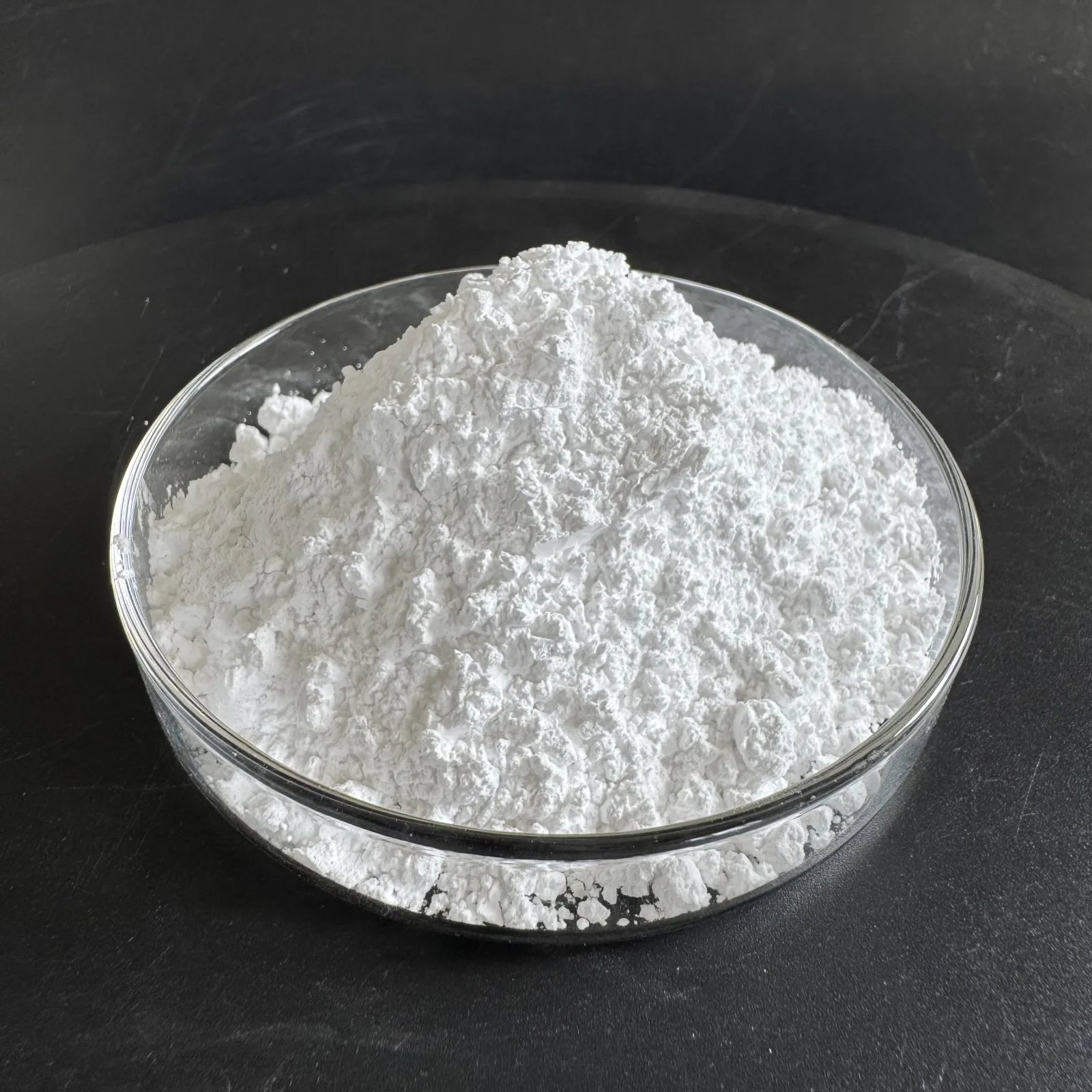
Calcined Alumina A75
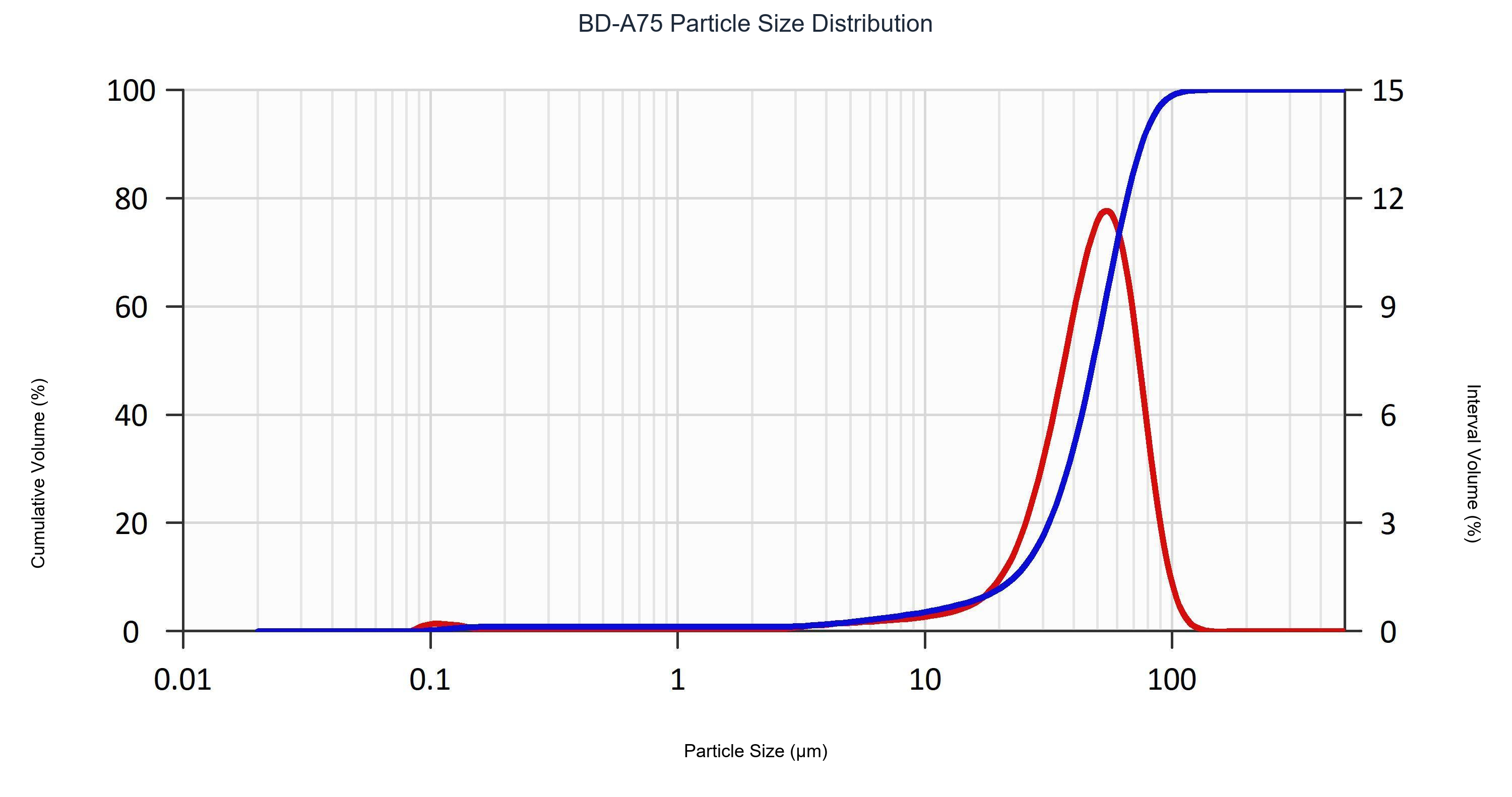
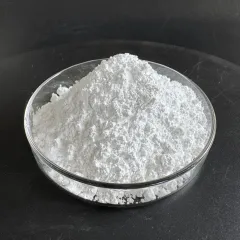
Calcined alumina abrasive with a D50 of 48.05 μm A75 is a calcined alumina abrasive. Wet laser particle-size testing of the A75 sample on 26 October 2026 reported a volume-based **D50 of 48.05 μm**, D10 of 22.93 μm, D90 of 74.87 μm, and a Span of 1.080. The reported chemistry inc...
查看完整介绍博丹按规格供应本产品。请告知加工材料、设备和表面处理要求,我们将为您确认适用牌号、尺寸及包装。
产品优势
主要特点
Why evaluate A75?
-
Defined particle-size data for process screening
The tested A75 sample has a **D50 of 48.05 μm, a modal particle size of 54.00 μm, and a modal bin of 53.37-60.04 μm. These values provide a clear starting point for matching the abrasive to a target particle-size range, formulation, and finishing process.
-
Reported chemistry and physical data
The report lists Al₂O₃, Na₂O, Fe₂O₃, SiO₂, CaO, MgO, TiO₂, moisture, LOI, BET surface area, and bulk density. This information can support technical discussions and incoming-material evaluation.
-
Trial-based application development
The report provides powder PSD, chemistry, and physical-property data. It does not report removal rate, surface roughness, or mirror-finish results on a workpiece. We therefore recommend trials with the actual substrate and process before selecting loading level and polishing sequence.
相关名称
常用名称
以下是本产品的其他常用名称,点击即可搜索相关产品。
产品详情
产品介绍
A75 Alumina Abrasive
Median particle size 48.05 μm | Al₂O₃ 99.80% | For stainless-steel grinding and polishing formulation development
A75 is an alumina abrasive sample with a median particle size (D50) of 48.05 μm measured by wet laser diffraction, a volume-distribution span of 1.080, and an Al₂O₃ content of 99.80%. It is suitable for evaluation in grinding, pre-polishing, and surface finishing of stainless-steel tableware and kitchenware; in grinding or polishing-formulation development for stainless-steel sheet, strip, pipe fittings, flanges, and hardware; and in composite-abrasive systems requiring an alumina abrasive with a median particle size near 48 μm.
Specifications
Particle-Size Distribution (Volume Distribution)
Metric | Unit | A75 Test Result |
|---|---|---|
D10 | μm | 22.93 |
D50 (median) | μm | 48.05 |
D90 | μm | 74.87 |
D97 | μm | 89.48 |
D99 | μm | 100.6 |
D100* | μm | 134.6 |
Modal particle size | μm | 54.00 |
Modal bin | μm | 53.37–60.04 |
Peak height | vol.% per bin | 11.68 |
Span | — | 1.080 |
Chemical and Physical Properties
Property | Unit | A75 Test Result |
|---|---|---|
Al₂O₃ | % | 99.80 |
Na₂O | % | 0.120 |
Fe₂O₃ | % | 0.006 |
SiO₂ | % | 0.003 |
K₂O | % | 0 |
CaO | % | 0.017 |
MgO | % | 0.002 |
TiO₂ | % | 0.001 |
Moisture | % | 0.052 |
LOI | % | 0.065 |
BET surface area | m²/g | 0.68 |
Bulk density | g/cm³ | 0.89 |
Suggested Evaluation Areas
Grinding, pre-polishing, and surface finishing of stainless-steel tableware and kitchenware
Grinding or polishing-formulation development for stainless-steel sheet, strip, pipe fittings, flanges, and hardware
Composite-abrasive systems requiring an alumina abrasive with a median particle size near 48 μm
Application note: These are suggested evaluation areas, not performance guarantees for a particular workpiece, process, or surface grade. Results depend on substrate grade, initial surface, binder or slurry, pressure, line speed, equipment, and downstream steps.
Test Method and Data Scope
Item | Reported Information |
|---|---|
Sample | A75 (China) |
Test / report date | 2026.10.26 |
Instrument | Bettersize 2600 laser particle-size analyzer |
PSD method | Wet laser diffraction; Mie optical model; adaptive analysis; volume distribution |
Measurement range | 0.02–2,600 μm |
Dispersant | Sodium hexametaphosphate |
Optical settings | Sample RI 1.778; absorption 0.1 |
The source report labels this value D100. Confirm its definition, test repeatability, and control limit with the testing party before using it as an incoming-inspection criterion. All values on this page are from one tested sample only; current-batch supply specifications should be governed by the agreed COA, TDS, or purchase contract.
FAQ
What is the median particle size of A75?
The A75 sample recorded a D50 of 48.05 μm by wet laser diffraction, reported as a volume distribution.
Can A75 be used for stainless-steel tableware and kitchenware?
It may be evaluated for grinding, pre-polishing, and surface finishing of these products. The report does not include processing results on tableware or kitchenware, so confirmation through trials on the actual equipment and formulation is required.
Is A75 alpha alumina?
This report does not include XRD or phase-composition testing. An alpha-phase claim cannot be made based on this report alone.
Can A75 deliver a mirror finish or prevent burning?
The report does not include surface roughness, gloss, removal-rate, temperature, or burn testing on workpieces. Mirror finish and burn prevention must be verified in the actual process.
Can these values be used as acceptance limits for every batch?
No. The values are from a single sample report. Batch acceptance should rely on the pre-agreed parameters, methods, tolerances, and current-batch COA.
Information to Include in an Inquiry
For a relevant A75 evaluation, provide the workpiece material and starting surface, target finish or roughness, current abrasive size, dry or wet process, binder or polishing slurry, equipment type, expected volume, target market, and any required acceptance criteria.
Calcined Alumina A75 了解批量采购及 OEM 订单的价格、交期和包装。