
Aerosol Can Mixing Ball Size Guide: 10, 14, or 16 mm?
Choose a 10, 14, or 16 mm aerosol mixing ball by validating can geometry, coating viscosity, valve clearance, and redispersion performance. Includes a trial protocol and purchase-order checklist.
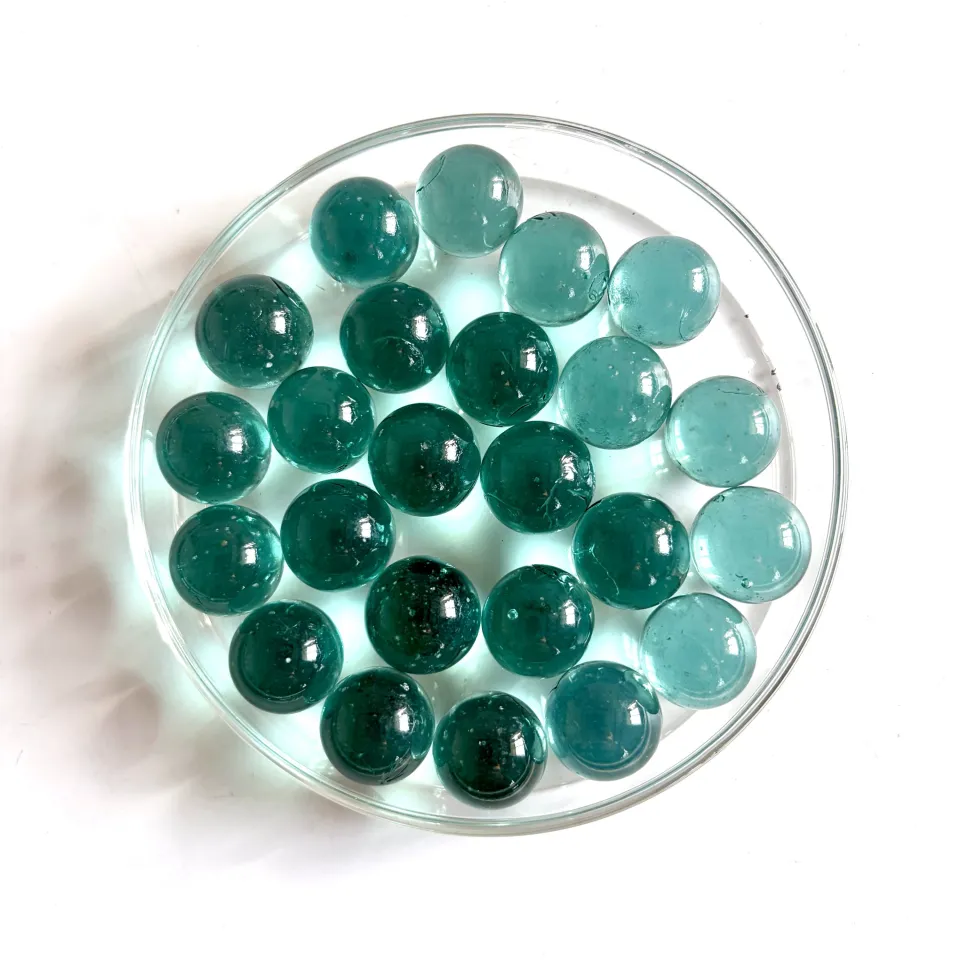
The short answer: most aerosol paint cans are fitted with a single mixing ball — also called an agitator ball, mixing marble or shake ball — between 10 mm and 16 mm in diameter. As a starting point, 10 mm suits small cans with thin, easily redispersed formulations; 14 mm is the common middle ground for standard 300–500 mL general-purpose spray paints; 16 mm is chosen for larger cans and high-solids, fast-settling coatings. But there is no single industry-wide standard that maps can size to ball diameter. The right size is the one that can move freely inside your can, clear your valve and dip tube, and break up your settled pigment. That has to be confirmed by trial, not by a chart alone.
1. What the mixing ball actually does
Pigments, matting agents, metallic flakes and fillers settle during storage. Left long enough, they form a compact layer at the bottom of the can that shaking alone may not fully redisperse. A free-moving ball inside the can converts that shaking into mechanical agitation: it rolls and strikes through the sediment, breaks the layer up, and helps return the formulation to a uniform state. The familiar rattle when you shake a spray can is that ball at work.
The practical benefits are consistent colour and gloss from the first spray to the last, a lower risk of settled solids blocking the dip tube or valve, and a more stable spray pattern. Notice that all of these depend on movement. A ball that is too large to travel, too small to carry enough momentum, or trapped in the bottom seam is dead weight — it rattles a little and mixes nothing.
This is also why a mixing ball is not a grinding medium. It is not there to mill pigment; it is a loose agitator. Sizing it is a mechanical-fit problem first and a mixing-energy problem second.
2. 10 / 14 / 16 mm at a glance
The three diameters below cover the great majority of glass and steel agitator balls used in aerosol paint and coating cans. The groupings are industry rules of thumb, not specifications.
Nominal diameter | Typical can / format | Typical formulation | Agitation behaviour | Watch out for |
|---|---|---|---|---|
10 mm | Small cans (roughly ≤200 mL), narrow-diameter cans, sample and touch-up sprays | Low-viscosity varnishes, clear coats, light-colour paints, low-solids systems | Light and mobile; travels easily in a short can; gentle on the can lining | Too light for dense or heavily settling pigment; may sit in the bottom chime and never reach the sediment layer |
14 mm | Standard 300–500 mL tinplate aerosol cans; the usual starting point for general-purpose spray paint | Medium-viscosity solvent- or water-based paints, primers, general coatings | Balanced mass and travel; the default candidate for most new formulations | Still needs a clearance check against the valve cup and dip tube |
16 mm | Large cans (≥500 mL) and cans with generous internal clearance | High-solids, high-viscosity or heavy-pigment systems: metallic, pearlescent, zinc-rich primers, anti-corrosion coatings | Heaviest impact; breaks up compact sediment fastest | Can jam in narrow cans or against the bottom curl; louder rattle; higher breakage risk for glass if the can is dropped or shaken violently |
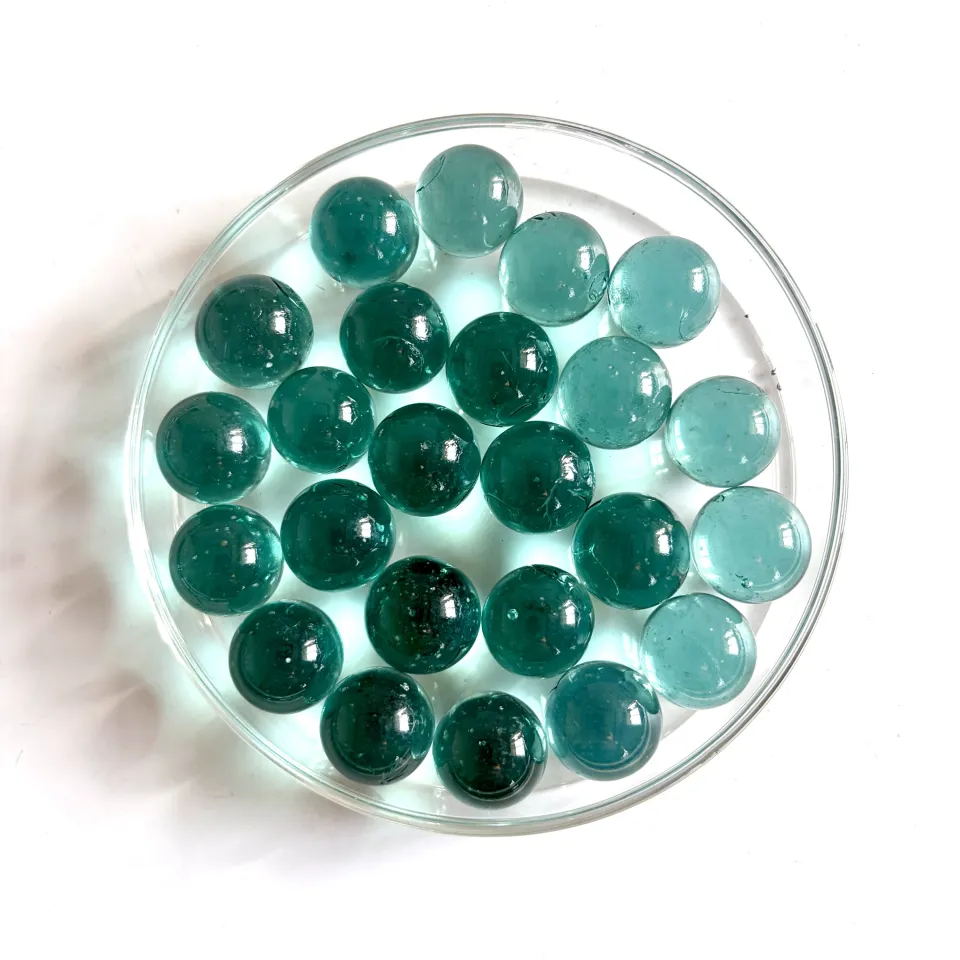
A useful way to read this table: smaller diameter buys mobility, larger diameter buys impact. Most selection work is finding the largest ball that still moves freely through the full height of the can.
3. Five variables that actually decide the size
Can internal diameter and bottom geometry. Measure the true internal diameter of the filled can, not the nominal outside diameter. The rolled bottom seam (the chime) reduces the effective flat area and creates a groove where an undersized ball can hide. An oversized ball can wedge between the chime and the can wall. Check the ball's path at the bottom, at mid-height, and at the shoulder.
Valve and dip-tube clearance. The ball must not obstruct the dip-tube inlet, interfere with the valve cup during crimping, or be able to lodge in the valve housing. This is the most common reason a theoretically "correct" size fails on the filling line. Always trial with the actual valve assembly, not a generic one.
Formulation viscosity and pigment density. Thin, slow-settling systems need little agitation; dense pigments and high-viscosity vehicles need more mass to break up a compacted layer. As a rough guide, ball diameter in aerosol paint applications is commonly chosen within 10–16 mm according to the viscosity of the formulation. Water-based systems in particular benefit from an inert, hydrolysis-resistant agitator. If your formulation changes — a new pigment grade, higher solids, a different solvent blend — revalidate the ball size.
Fill volume and headspace. The ball needs free space to travel. Overfilling shortens its path and reduces mixing energy; a very low fill may leave the ball rattling in mostly empty space with poor contact with the sediment. Check the ball's behaviour at your real fill weight.
Filling equipment and tolerance. Automatic ball dispensers feed by size and count, and they are sensitive to diameter spread, sphericity, static and surface cleanliness. A nominal 16 mm ball supplied at ±0.5 mm is normally fine for manual or semi-automatic insertion, but a high-speed dispenser may justify a tighter agreed tolerance. Confirm the tolerance with the equipment supplier before fixing the specification.
4. Glass or stainless steel?
Size and material should be decided together, because density changes how much agitation a given diameter delivers.
Property | Soda-lime glass ball | 304 / 316 stainless steel ball |
|---|---|---|
Density | Approx. 2.4–2.5 g/cm³ | Approx. 7.8 g/cm³ |
Agitation force | Moderate | Strong — breaks up heavy sediment faster |
Chemical behaviour | Chemically inert; no rust; very good hydrolysis resistance | Risk of corrosion in water-based or aggressive systems; can cause dark spots in light colours |
Colour contamination | None; suitable for clears, whites and light shades | Possible with inferior grades or long storage |
Failure mode | Can chip or break under severe impact; fragments may clog the valve | Can corrode; plain carbon steel must never be used |
Typical fit | Water-based paints, varnishes, light colours, long shelf life | Dark, metallic and high-viscosity industrial coatings, frequent shaking |
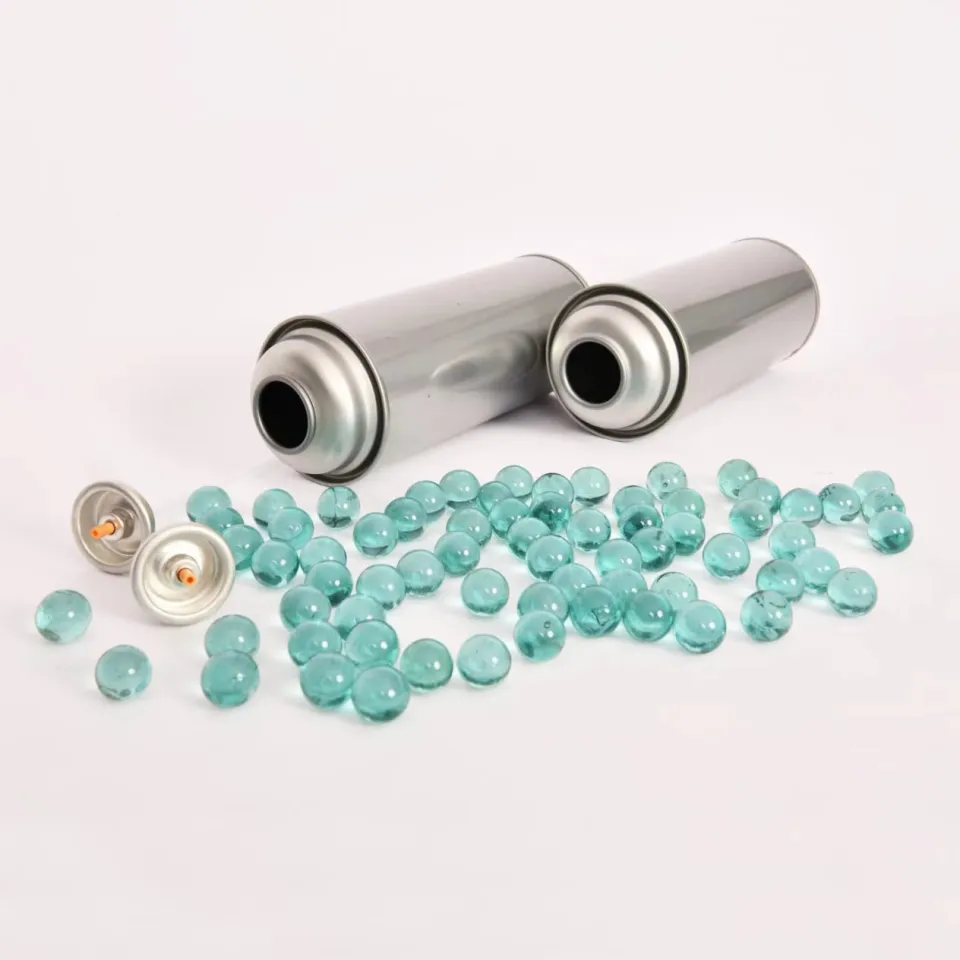
Glass is generally preferred where colour purity and long-term storage matter — it is inert, non-magnetic and does not leach rust. Steel is chosen when mixing energy is the limiting factor. Whichever you use, compatibility must be confirmed against the complete system: paint, solvent, propellant, can lining and valve. No material is universally compatible with every formulation.
Our standard product in this category is a 16 mm transparent light-green soda-lime glass mixing ball, supplied at ±0.5 mm nominal tolerance with custom diameter, tolerance, colour and packing available on request.
5. One ball or two?
One ball per can is the usual configuration. Two or three smaller balls are sometimes used in large cans or high-viscosity products to create multi-directional agitation. The trade-offs are real: extra balls reduce free volume, increase the chance of jamming against each other or the dip tube, raise the breakage risk for glass, and can alter the spray behaviour. If one correctly sized ball does not redisperse the sediment after accelerated storage, test a second ball — but do not add balls to a finished formulation without a full requalification.
6. A practical validation protocol
A size decision that has never been shaken, stored and sprayed is only a guess. A workable qualification sequence looks like this:
Record the geometry. Internal can diameter, bottom chime profile, dip-tube inlet position and clearance, valve cup depth, fill volume and headspace.
Shortlist candidates. Typically two diameters (for example 14 mm and 16 mm) and, where relevant, two materials. Request samples produced to the tolerance you intend to buy at.
Run a redispersion test. Fill cans with the real formulation, store them under accelerated conditions, then shake to a fixed protocol and measure the time and number of shakes needed to fully redisperse. Open control cans to check for residual sediment at the bottom seam.
Check the failure modes. Spray pattern and colour consistency, valve or dip-tube blockage, ball breakage after drop and transport simulation, can-lining damage, and any colour shift or corrosion after storage. For steel balls, inspect for rust; for glass, inspect for chips.
Trial on the line. Confirm dispenser feeding, counting accuracy, static behaviour and breakage rate at production speed. Then freeze the specification.
The output of this process should be a written specification, not a sample bag: nominal diameter and tolerance, material, colour, surface and cleanliness requirements, inspection method, and packing.
7. What to put on the purchase order
Item | Example specification |
|---|---|
Nominal diameter | 16 mm (10 mm and 14 mm can be quoted for other can formats) |
Diameter tolerance | ±0.5 mm standard; tighter tolerance subject to feasibility review |
Material | Soda-lime glass (borosilicate or 304/316 stainless on request) |
Colour | Transparent light green; custom colours for line identification |
Surface / cleanliness | Smooth surface; cleanliness and inspection requirements agreed before order |
Compatibility statement | Validated in the buyer's paint, solvent, propellant, can lining and valve system |
Packing | 25 kg bags, inner bags in jumbo bags, palletised shipment, customer labels |
Documentation | Diameter inspection, visual inspection report, agreed AQL |
Including can dimensions, formulation type, viscosity range, filling method, target quantity and destination in the enquiry lets the supplier quote a matched specification rather than a generic catalogue size.
8. FAQ
Is a 16 mm ball always better because it mixes harder? No. A larger ball only helps if it can travel the full height of the can. In a narrow or heavily filled can, a 16 mm ball may jam near the bottom curl or interfere with the dip tube, while a 14 mm ball keeps moving and actually mixes better.
Can I use two 10 mm balls instead of one 16 mm ball? Sometimes, especially in larger cans, but the total mass and the way the balls move are different. Test both configurations for redispersion time, jamming and valve blockage before changing a qualified specification.
What diameter tolerance do I need? ±0.5 mm is a common commercial tolerance for glass mixing balls and is adequate for many manual and semi-automatic filling setups. High-speed automatic dispensers may require a tighter, agreed tolerance — confirm with your equipment supplier.
Will glass balls break inside the can? They can chip or break under severe impact, and fragments may block the valve. Specify surface quality and inspection, avoid violent handling, and include a drop/transport test in your qualification. A broken ball is a quality incident, not a cosmetic one.
Are glass balls suitable for water-based paints? Inert glass with good hydrolysis resistance is generally preferred over metal for water-based systems, because it will not rust or stain light colours. Compatibility with your specific solvent, propellant and can lining still needs to be verified.
Do you supply 10 mm and 14 mm as well? 16 mm transparent light-green glass balls are our standard listed product. Other diameters, tolerances, colours, packing and labels can be quoted against your can dimensions and filling process — send those details with your enquiry.
Bottom line
Choosing a mixing ball is not a matter of picking the biggest marble that fits. Start with 10 mm for small, thin formulations, 14 mm for standard spray paint cans, and 16 mm for large or heavy, fast-settling systems; then let can geometry, valve clearance, viscosity, fill volume and filling equipment narrow the choice. Validate it with a real redispersion and line trial, and lock the result into a written specification. That is what turns a rattling ball into consistent colour, a clear valve and a reliable spray, can after can.
For specification details and sample requests for 16 mm transparent green glass mixing balls, see our 16 mm Transparent Light Green Glass Mixing Balls product page.